

The Analog Revolution
Eight Cultural Shifts That Will Define Life in the Age of Artificial Intelligence

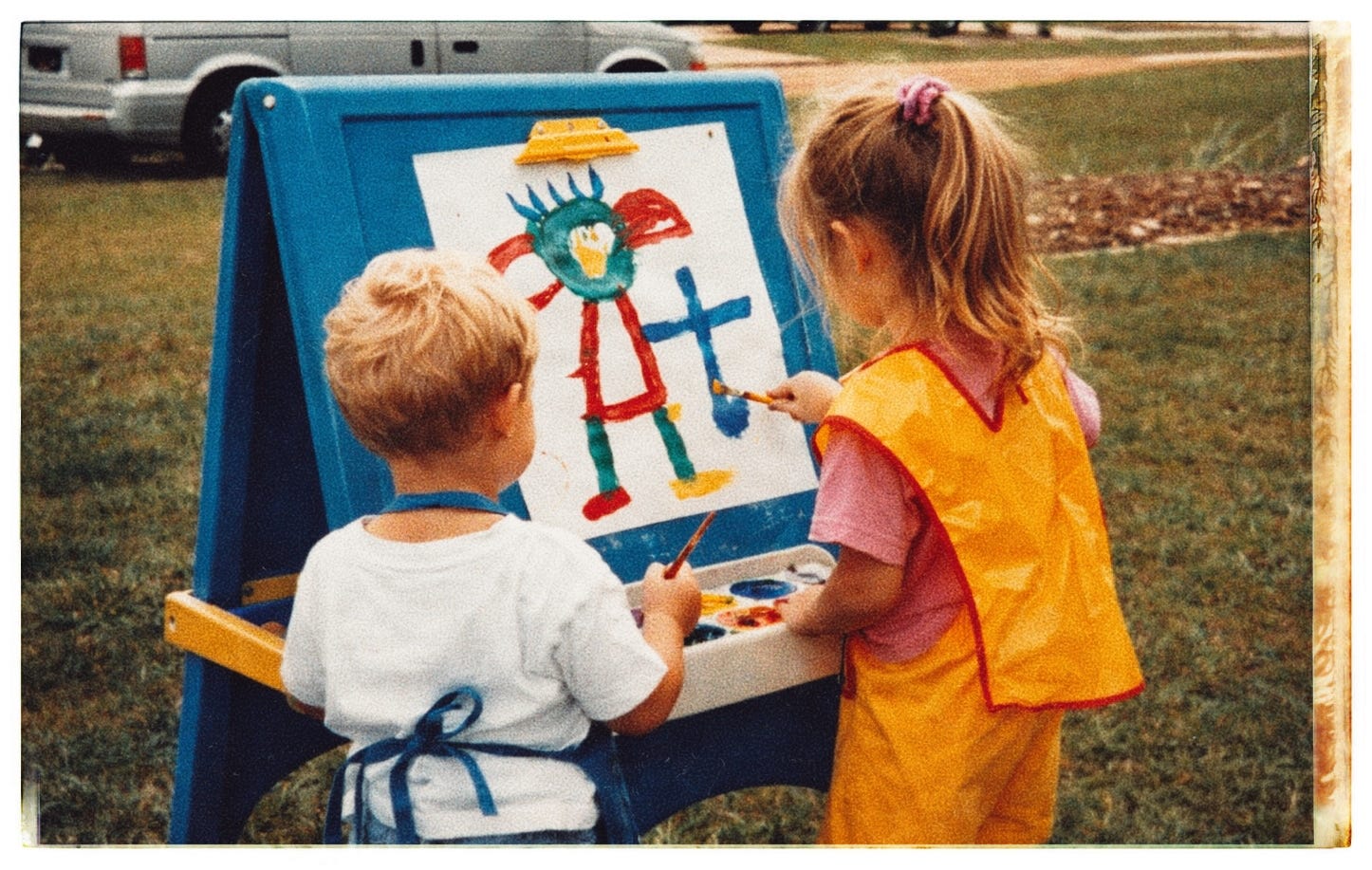
If you zoom out far enough, history moves in strange loops.
Every major technological leap seems to produce its own counter movement. The printing press gave us mass books and eventually the slow appreciation of rare manuscripts. Photography made images infinite and suddenly paintings became more valuable than ever. Spotify put nearly every song ever recorded into our pockets and vinyl records came roaring back.
The next twenty years will likely follow the same pattern.
Artificial intelligence is accelerating the production of information at a pace that would have been unimaginable even a decade ago. The natural assumption is that the world will simply become more digital. More screens. More automation. More answers instantly available.
But history rarely moves in straight lines.
As AI expands the digital world at an exponential pace, something unexpected will grow alongside it. The analog world will become more valuable. Not everywhere and not all at once, but enough to shape culture in ways that will surprise people.
In the last thirty years, humanity increased information production roughly 18,000 times. That means the defining challenge of the next generation will not be access to information. It will be deciding what deserves our attention.
The next status symbol may not be access to technology.
It may be the ability to live well without it.
The more powerful our technology becomes, the more valuable being human will be.
Here are eight cultural shifts that may define the early years of the AI era and the rediscovery of what it means to be human.
1. The Rise of the Curator
For most of human history, information was scarce. Today it is overwhelming.
Estimates suggest that about 402 million terabytes of data are created globally every day, which works out to roughly 280,000 terabytes every minute. Reports from organizations like Domo’s Data Never Sleeps and research aggregations such as Exploding Topics show the scale of this explosion.
For context, a landmark study from researchers Peter Lyman and Hal Varian at the University of California, Berkeley estimated that all of humanity produced about 8 exabytes of new information in 1995. Today we produce that same amount in roughly 28 minutes.
In just thirty years, information production has increased roughly 18,000 times.
It would be easy to assume that more information leads to more clarity. In reality it often produces the opposite. When answers become infinite, judgment becomes rare.
This is why one of the most influential roles of the next two decades will not be the creator. It will be the curator.
We have seen this pattern before. When art became mass produced through printing and photography, the art world responded by elevating the curator. Museums became trusted filters. Galleries became places where someone had already sorted through the noise and decided what deserved attention.
The same shift is beginning to happen with information. People increasingly pay trusted individuals to sift through overwhelming amounts of data and tell them what actually matters.
We see this in the rise of Substack newsletters replacing traditional media voices, doctors publishing curated research for health communities, financial analysts building followings around investment insight, and podcasters becoming interpreters of complex cultural issues.
In the age of infinite information, trust becomes the rarest resource. The most powerful people in the world will not be the ones who create the most content. They will be the ones people trust to tell them what actually matters.
2. The Source Will Matter Again
When something becomes abundant, people begin to care more about where it came from.
Food offered an early signal. For decades grocery stores optimized for scale and efficiency. Then something changed. People started asking where their food was grown, who raised the animals, and what farm produced the coffee beans in their morning cup.
Single origin coffee exploded in popularity. Farmers’ markets multiplied. Restaurants began printing the names of farms directly on their menus.
People were not simply buying food. They were buying a story of origin.
The same shift is beginning to happen with information.
Artificial intelligence can now generate essays, images, ideas, and explanations in seconds. As this ability expands, the value of the final output will slowly decline.
What will increase in value is the thinking behind the idea. People will want to understand how a thought formed, what questions shaped the conclusion, and what experiences informed the direction of the idea.
Not simply citations. Intellectual lineage.
The map of thinking will matter as much as the thinking itself. When answers become instantly generated, originality becomes rare. Rare things become valuable.
3. The Rediscovery of Play
Something strange happened to childhood over the last generation.
Screens quietly replaced play.
Research from organizations studying childhood development shows that only about 31% of children play outside daily today, compared with roughly 70% of their mothers’ generation. In one generation we moved from a majority of children playing outdoors every day to less than a third.
The consequences are becoming harder to ignore. Rising anxiety among young people, increasing attention challenges, and growing struggles with identity and resilience are appearing across many countries.
We are still early in understanding the full impact, but one answer is slowly rising to the surface again.
Children need play.
Not simply structured sports or organized activities. Not digital entertainment designed by algorithms. They need play that is physical, social, and unstructured. Climbing things, building things, and exploring environments with other kids.
Urban planners are beginning to respond. Across many cities the rise of destination playgrounds is becoming noticeable. Instead of small neighborhood swingsets, communities are building large adventure parks designed to draw families from across entire regions.
Adventure playgrounds where children construct forts, use tools, and shape their own environment are spreading in Europe and North America. Adults are rediscovering play as well through climbing gyms, trampoline parks, water parks, and obstacle courses.
Economists call this the experience economy, where people increasingly spend money not on possessions but on activities.
Play did not disappear.
We simply forgot how essential it was. Now we are rediscovering it.
4. Paying to Disconnect
One of the most surprising luxuries of the future may be the absence of digital noise.
We are already seeing early signals of this shift. A bar called Hush Harbor in Washington DC asks guests to place their phones in locking pouches when they enter. The goal is simple. Create a space where people talk to each other again.
Other events now market themselves as phone free experiences. Digital detox retreats are growing. Restaurants are experimenting with device free dining.
Even the music industry is seeing a revival of analog formats. Vinyl records, which have no notifications, no algorithm, and no infinite scrolling, have outsold CDs in the United States for multiple years.
As the digital environment becomes louder and more optimized for capturing attention, analog presence becomes increasingly valuable. People will begin to pay for environments that allow them to disconnect from constant stimulation and reconnect with each other.
5. The End of the Digital Nomad Dream
Not the end entirely. But the end of it as the dominant aspiration.
After COVID a powerful idea captured the imagination of millions. Work from anywhere. Travel constantly. Live a permanent semi vacation life funded by remote work and cheap flights.
Social media amplified the vision. Every scroll delivered a new destination, a new city, a new beach, and a new laptop lifestyle that seemed to promise total freedom.
For a moment it felt like the future.
But humans are not built for permanent mobility. We are built for connection.
Over time a quieter realization is emerging. The most meaningful parts of life rarely come from spectacular scenery. They come from relationships.
Knowing the barista at the coffee shop. Walking into a place where someone recognizes you. Living close enough to family that birthdays and Sunday dinners happen naturally.
Sociologists have long noted that strong community ties are one of the most reliable predictors of happiness.
Which means the cultural pendulum may slowly swing back toward something that used to be normal. Choosing where you live based on relationships rather than scenery.
The most meaningful lives may not be the most geographically impressive ones.
6. Education Will Change
If artificial intelligence can instantly answer factual questions, education will have to focus on something deeper.
The future of education will place greater emphasis on understanding systems, making sound decisions, telling meaningful stories, and connecting ideas across disciplines.
Instead of memorizing information that can be instantly retrieved, students will need to learn how to think clearly in a complex world.
In ancient Athens Aristotle taught in a place called the Lyceum. Learning there revolved around conversation, philosophical inquiry, and the formation of character.
Strangely enough the age of artificial intelligence may push education closer to something like that again.
The value of education will not come from access to information. It will come from learning how to navigate it.
7. Unplugged as a Lifestyle
Every major technological change eventually produces a group of people who decide the innovation is not for them.
Sociologists studying innovation describe a bell curve known as the diffusion of innovations. Innovators adopt new ideas first. Early adopters follow. Eventually the early majority and late majority embrace the change. At the end of the curve sit the laggards.
Within that final group is a smaller category often overlooked. Rejecters. People who simply decide that a particular innovation does not align with the life they want to live.
Over the next twenty years we may see a new cultural identity emerge around that instinct.
Not anti technology. Simply unplugged.
Analog journaling, device free gatherings, offline hobbies, and digital minimalism practiced not as a temporary detox but as a philosophy of life.
In an age of infinite digital replication, physical experiences regain their power.
8. The Human Advantage
For most of modern history intelligence was defined by the ability to know things.
School rewarded memorization. Careers rewarded expertise. The smartest people in the room were often the ones who could recall the most information.
Artificial intelligence is quietly changing that definition.
Machines can retrieve information instantly. They can summarize research papers, write essays, generate images, and explain complex topics in seconds.
If knowledge becomes infinite and instantly accessible, the advantage of humans will not come from knowing more.
It will come from being more human.
Judgment. Curiosity. Creativity. Moral reasoning. Storytelling. The ability to ask good questions.
When machines can answer questions instantly, the most important thing humans can learn is which questions are worth asking.
The Analog Future
In a world where machines can answer any question, the most valuable people will be the ones who know which questions are worth asking.
We cannot control how quickly technology advances. We cannot slow the pace at which information multiplies. We cannot stop algorithms from becoming more persuasive.
But we can decide how we navigate the world that is emerging.
That choice begins with something deeper than technology. It begins with asking better questions about our own lives. Questions about purpose, values, and direction that require us to sit still long enough to imagine what truly matters.
The future will be fast. It will be noisy. It will offer more information than any generation has ever encountered.
But the people who thrive in that world will not simply be the ones who consume the most information.
They will be the ones who know why they are living the life they chose.
The future may be artificial.
But the most valuable things in it will still be human.
Talk soon,
Stephen
Children need play.
Some of my best memories were playing with my neighbors in the woods. Creating stories, using imagination, climbing trees. It was the best
A refreshingly clean perspective on what has been an overwhelming topic to think on, thank you!